Part 1 of 3 — Open Source Social Algorithms
How MapsTransform the World
Making the World
Early maps were directions. One person reading the needs of another and sketching a path: over the hill, through the pine trees, cross the stream by the big rock.
The known world had a center — the village, the valley, the familiar — and an edge past which things became dangerous or simply unknown. A map was a tool for extending safe passage a little further into that unknown. It was personal, local, and built from the perspective of whoever was drawing it.
This changed as trade routes expanded across continents. Maps became assets. Explorers and merchants carried them, revised them and brought them back. The next generation copied those revisions and pushed further. Over time, competing versions of the same territory could be compared — the errors identified, the reliable details confirmed. Map-making became a collective knowledge project, cumulative across generations in a way no individual journey could be.
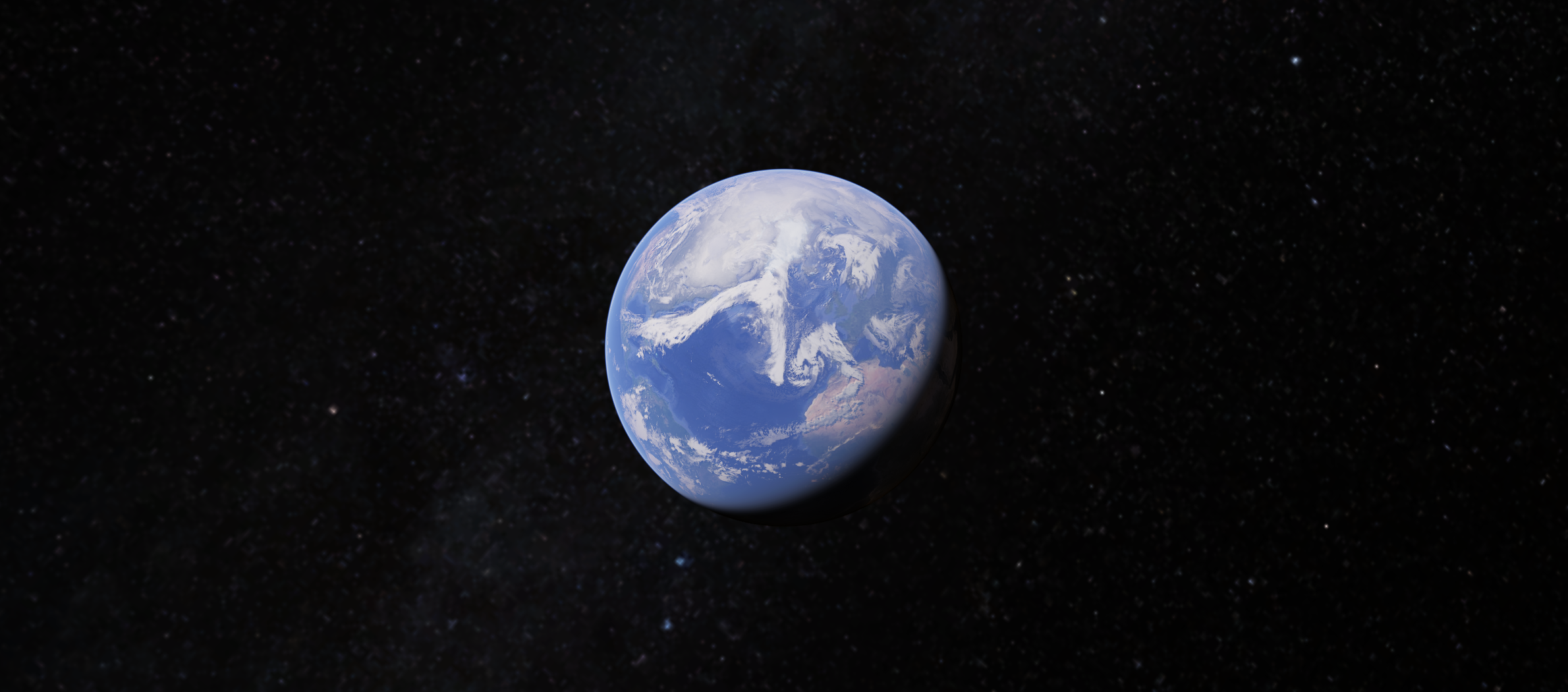
Then something more monumental happened. Through the study of the night sky and the slow accumulation of explorers' accounts, a new idea took hold: all the far lands of the world connected. The edge wasn't an edge. The flat map with its fuzzy unknown perimeter was actually a section of a sphere. At some point this stopped being a theory and became a perception — the world ‘became’ whole.
This was a phase transition in the mind of man. The project of map-making changed in kind. It was no longer about extending the boundary of the known — it was about filling in a complete object. And because the object was now whole and shared, it became a framework that all peoples could contribute to. Earth scientists, industrial planners, navigators, governments — anyone with data to contribute could map it onto the same surface. Coordinate systems replaced local landmarks. Layers of unrelated knowledge became interoperable because they shared a common substrate. What had begun as personal directions between individuals became the infrastructure for global coordination.
Mapping Culture
If we look at the evolution of the globe we can see it didn't begin with an abstract global intention — just a simple but compelling desire. Trade, for example. The realization that other, different people had something interesting and valuable that ‘our’ people didn't have.
The human world is a collection of disparate cultures. There are people that live with the rhythms of the plants and the earth. There are people who live in glass towers insulated from these cycles. Some people view humanity as a competition to crown the greatest, others to raise our collective baseline. We are divided. Or so it seems. We all want something. We all start from somewhere and must take a journey to find it. In this way we are primed for the project of mapping our culture.
People are already busy creating maps for others to follow. Millions have documented their journeys — in courses, workshops, therapeutic modalities, and social feeds — representing genuinely different starting points, different terrains, different destinations. The self-help movement, the explosion of online courses, the endless stream of people narrating their experience on social media: all of it is cartography. Personal maps of the human journey, more widely distributed and immediately accessible than at any point in history.
The problem is that none of it accumulates. A course reaches ten thousand people and the collective insight from those ten thousand journeys mostly disappears. A thread about someone's experience with grief or transformation gets millions of engagements and then scrolls away. The knowledge doesn't compound the way scientific knowledge compounds — each iteration building on the last, errors corrected, patterns confirmed across independent observations. We are still in the stage of individual explorers returning with their accounts. The infrastructure that would turn those accounts into a shared, cumulative understanding of the terrain doesn't yet exist.
Seeing the Whole
At the heart of this project is the belief that humanity is whole. Watch the news and this may be difficult to believe, but then war or no, humanity has focused much of its knowledge on creating taxonomies of difference. Country, religion, race, class — the language of separation is precise and well-developed. We now have the challenge of developing a new skillset: seeing wholes.
There are methodologies that have worked this out at the individual scale. Internal Family Systems is one. It doesn't begin by filtering out the unwanted parts of the psyche — it begins by learning to hold all the parts in view at once, observing the roles they play and the relationships between them. The result is not the elimination of conflict but a shift in perception: from fragmentation to a self that can see itself whole.
Life gives us our ‘compelling desires’. We all navigate desire and loss, connection and isolation, the gap between who we are and who we want to be. The starting points differ. The terrain differs. But the fact of the journey is shared. All we need is a framework that allows us to stitch together our varied experiences of that desire into a cohesive whole.
Holoscopic is built to do this. It asks people to place their experience and perspective within a shared framework — not to flatten those perspectives into consensus, but to make them spatially legible in relation to each other. Each contribution is a data point in a collective map. Over time, across activities, communities and topics, a knowledge graph accumulates.
The goal is the same perceptual shift the globe produced: from a collection of defended territories to a single human project that everyone is contributing to and navigating within. Not a utopia of agreement, but a change in relationship — from competition over scarce authority to the collective harvesting of the ways we are growing, together. Our bet is that, much the way the globe has enabled an acceleration of mapping technologies, so can we inspire a wave of whole human cultural technologies.
More details about our approach in the essays that follow.